Tales from our Mexican producers - the first in a series!
Last November, we travelled around Mexico and met many of the hard-working farmers who grow our wonderful heirloom beans. While there we signed fair-trade agreements promising them security in the event of a ‘force majeure’ crop loss
An ancient farming system and a riot of colour
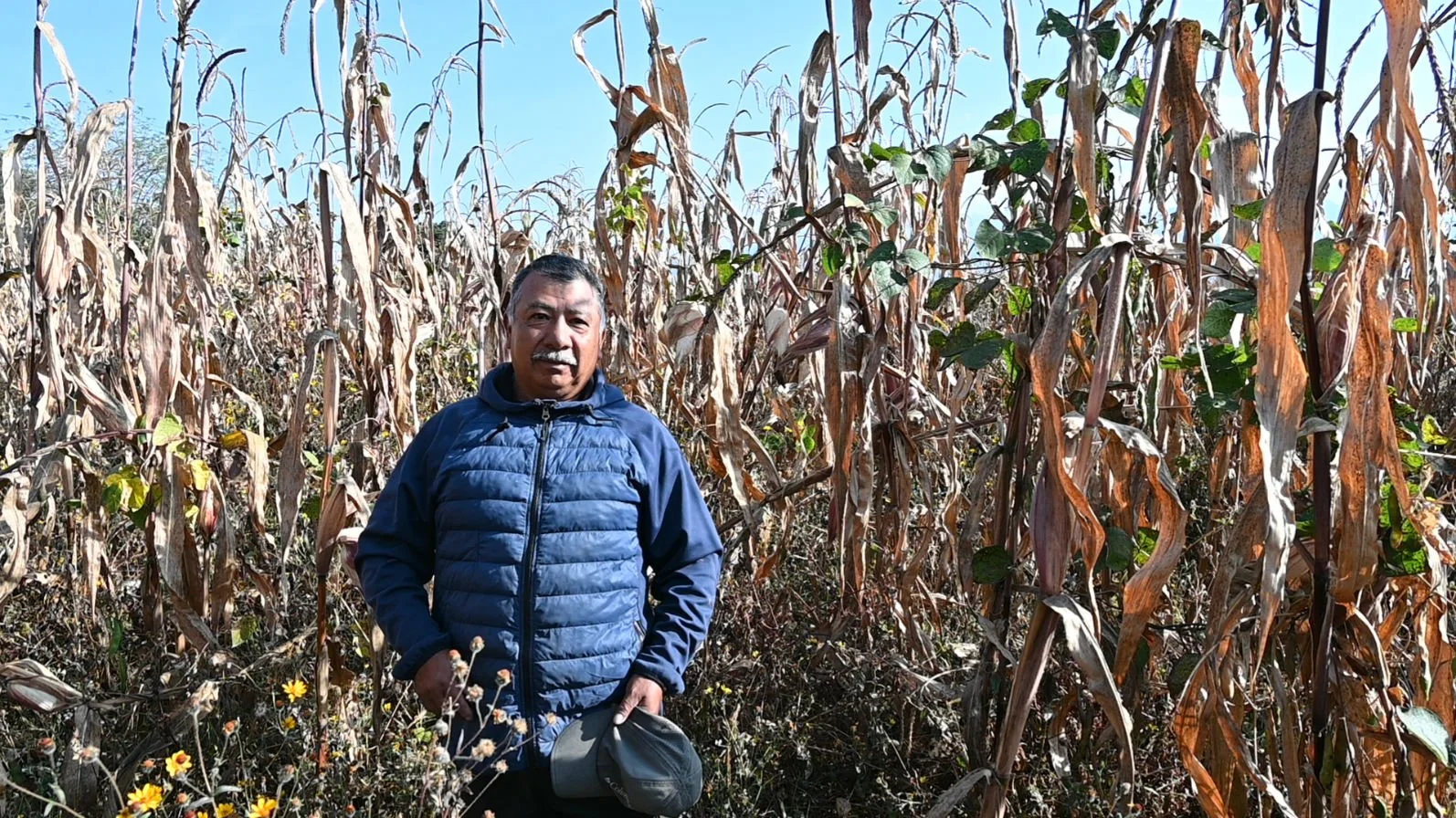
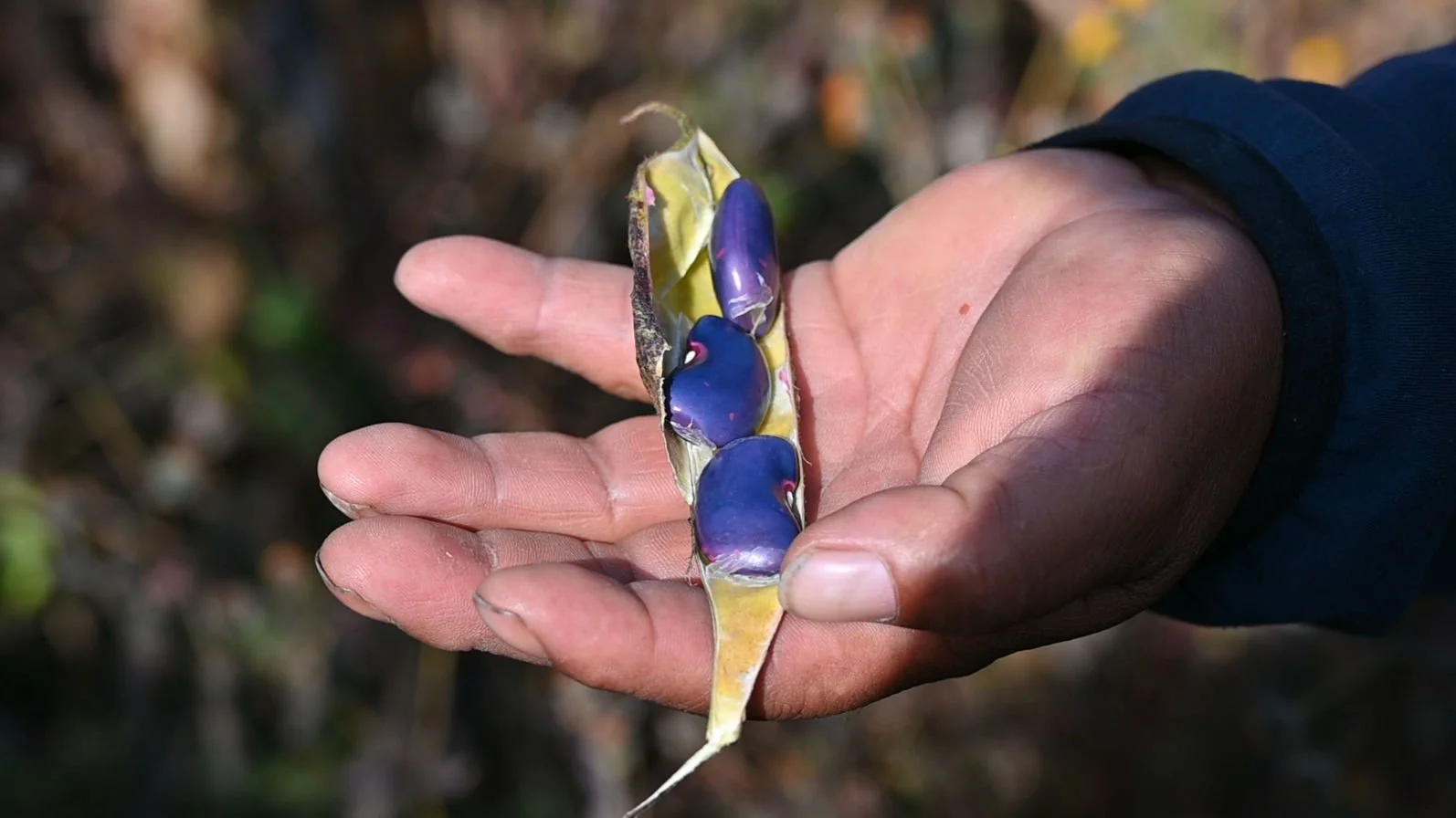
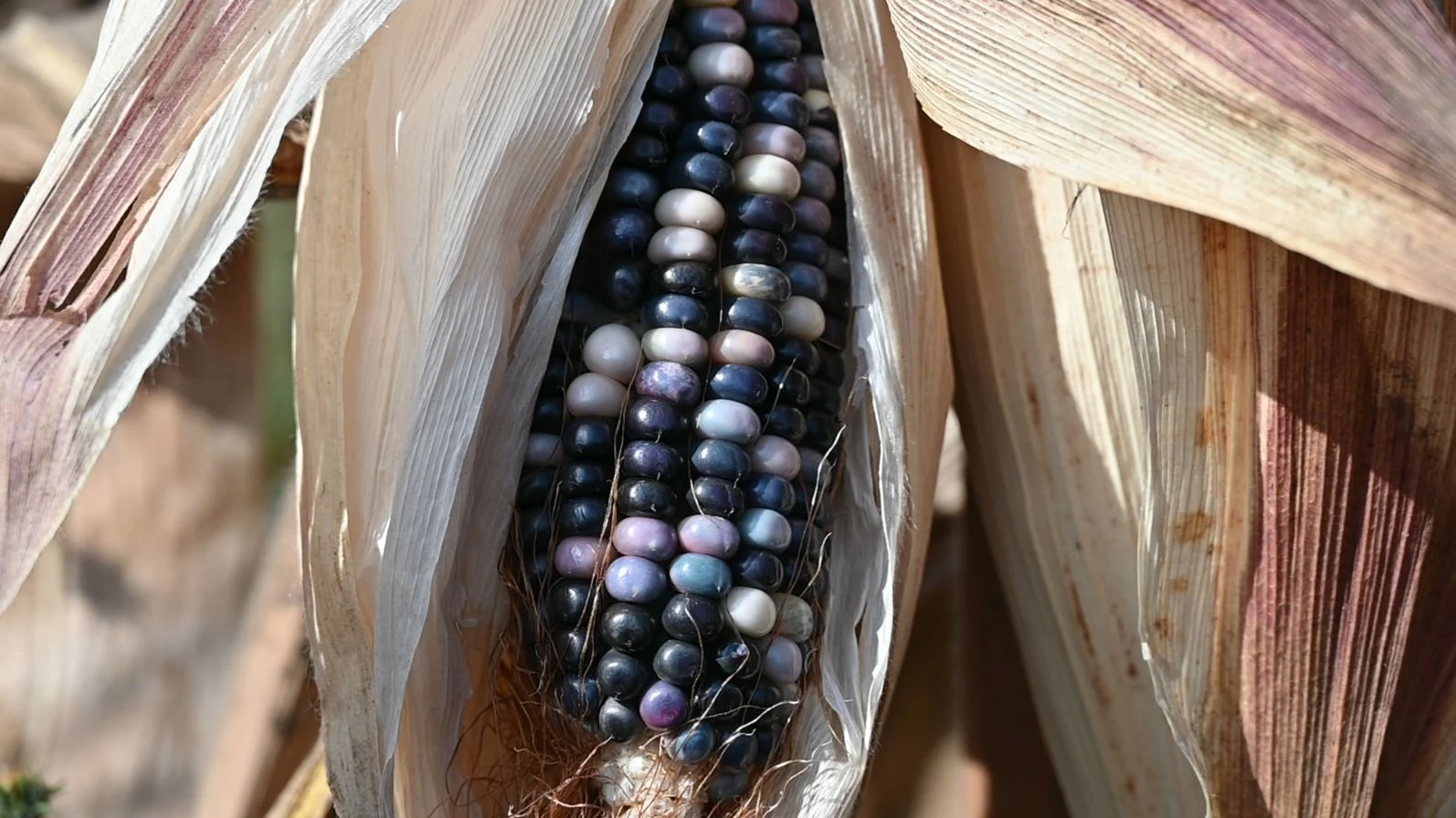
The dry, brittle leaves rustle as Ernesto Rancaño steps into the field ahead of us. A few steps in and he has all but vanished from view among the tall maize plants. Now, at the beginning of December, the fat corn cobs are nearly ready to be harvested. Carefully Rancaño peals the outer layer back to reveal the ripe kernels which are blue, almost black, with a few lighter, purple ones in between. On his one hectare plot he not only grows traditional red, blue and white maize, but also heritage beans, which climb all the way to the top of the maize stalks. The beans inside the well filled pods are huge and have a startling blue colour. Ayocote morado is just one of many Mexican heirloom bean varieties. Normally their colour ranges from lavender to deep shades of purple, ocean blue ones like those in Ernesto Rancaño's field are rare. He grows heritage maize and beans together in what's known as a traditional milpa system. Often, squashes can be found in milpas, too, maize, bean and squashes therefore are also known as the 'three sisters', each supporting the other.
The milpa system
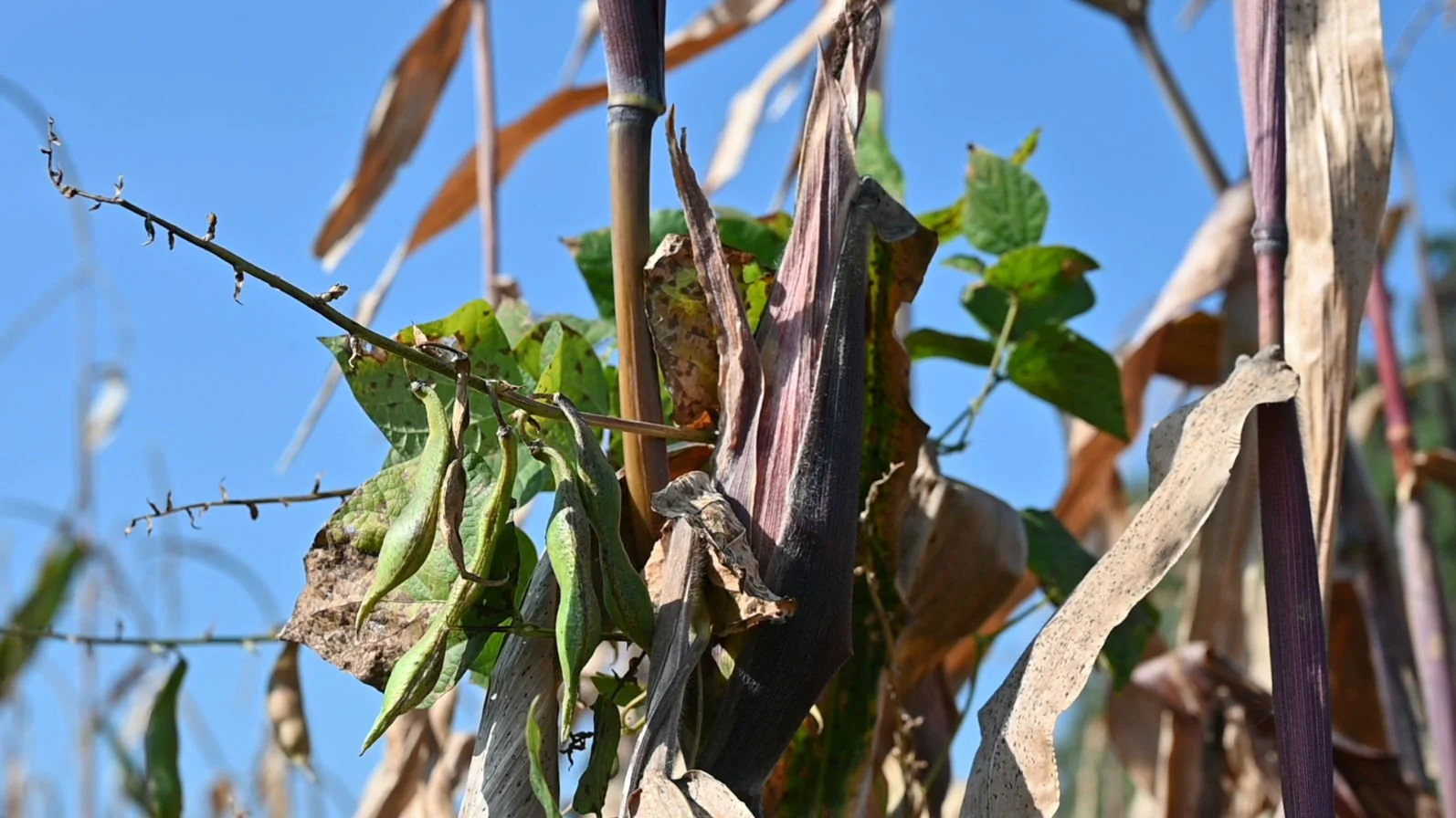
The tall corn plants give support to the beans which, like all legumes, have the ability to produce their own fertiliser by fixing atmospheric nitrogen in nodules in their root system. As the beans fix more nitrogen than they need to grow, the surplus benefits neighbouring plants - like maize and squashes in a milpa system. The third sister, the squashes, in turn also benefits the others: their big leaves shade the ground: This not only suppresses weed growth, but helps preserve soil moisture - which is vital in a dry, hot climate such as that in central Mexico.
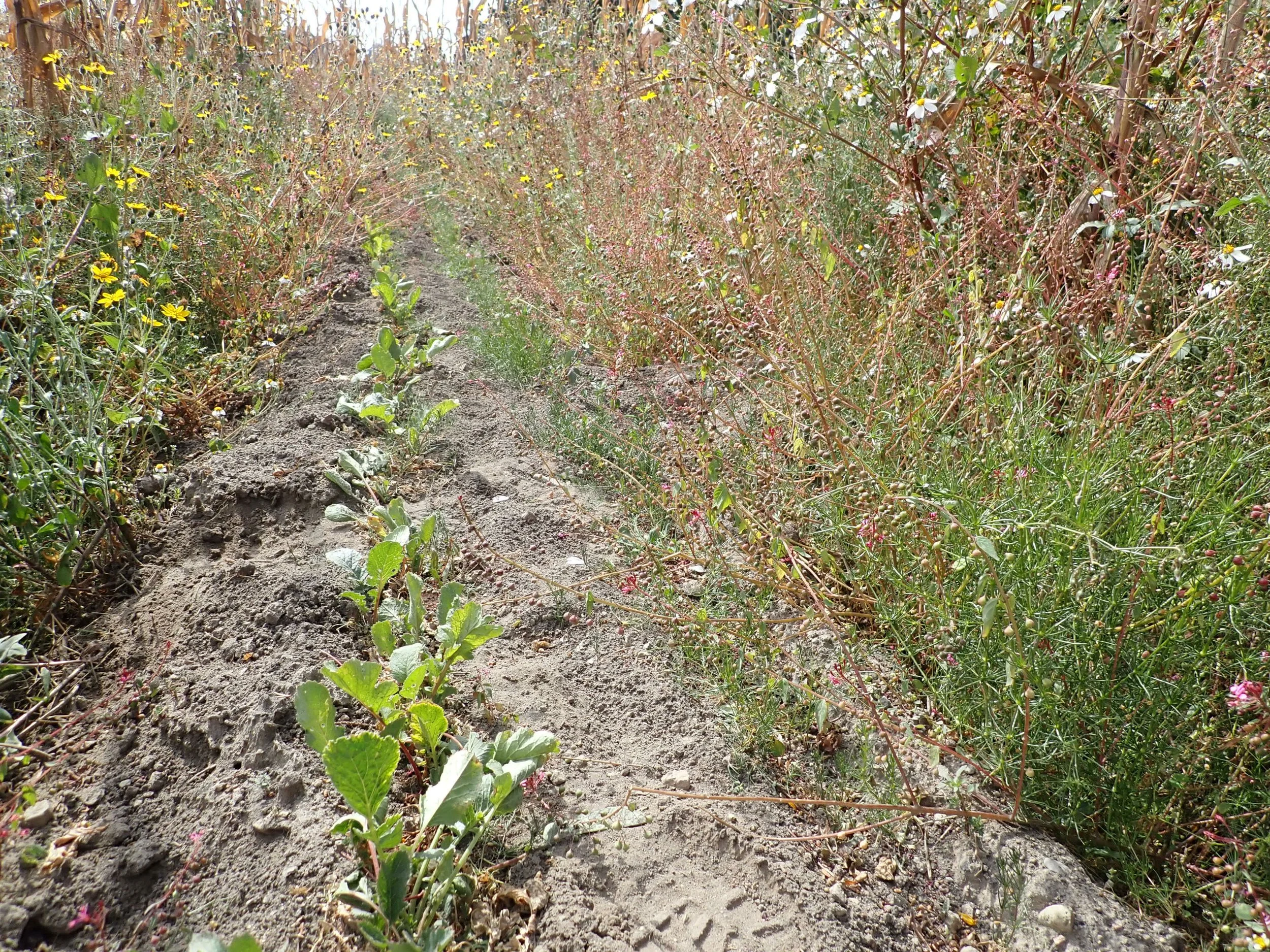
Rancaño can't grow squashes because of the sandy soil in this fields. Instead he works with cover crops, naturally occurring species which not only provide soil cover, but also flower at different times throughout the growing season and attract pollinators such as bees, wasps and hummingbirds.
In February he brings in two horses to clean the field and then establish furrows. On the ridges, three corn seeds are planted together with one bean - the maize plants need very little space but grow very tall and by winding itself around the corn stalks the bean gives them stability - the 'three corn, one bean units' withstand even strong winds well, says Rancaño.
Climate crisis mitigation
In recent years weather patterns have changed as a result of the climate crisis: the start of the growing season tends to be much hotter, in some years there is very little rain, in other years rainstorms cause flooding. There is little farmers can do during a prolonged drought, but the furrows help Rancaño deal with too much rain: he is able to deepen them which keeps the shallow maize root system from rotting. The cover crops hold the soil and facilitate water infiltration.
The milpa system could be ideal if it weren't for the fact that it can only be harvested by hand: it takes five people four days to pick the beans and harvest the maize. Traditionally, farmers came together to help each other, but there are fewer and fewer who grow heritage corn and beans the traditional way. Twenty years ago, Rancaño knew over a hundred farmers who worked with a milpa system, today there are only about 20 left. And the price they get for heritage beans and corn is too low as to compensate for paying for extra labour during harvest.
At The Heirloom Bean Co we pay enough for Rancaño's beans to allow him to continue growing them. Via the exporter we also pay a Fair Trade premium to co-finance an advance at the time of planting. In case of a crop loss, e.g. because of a severe weather event, the advance does not have to be repaid. By sharing the risks involved of growing expensive varieties in a traditional way, we help to preserve the knowledge of working with a milpa system - it's sustainable and adaptable to the wildly varying growing conditions that seem to be the new normal…
Words by Marianne Landzettel; photos by Martin Kunz