When the climate crisis hits hard... you look for ways to grow beans differently
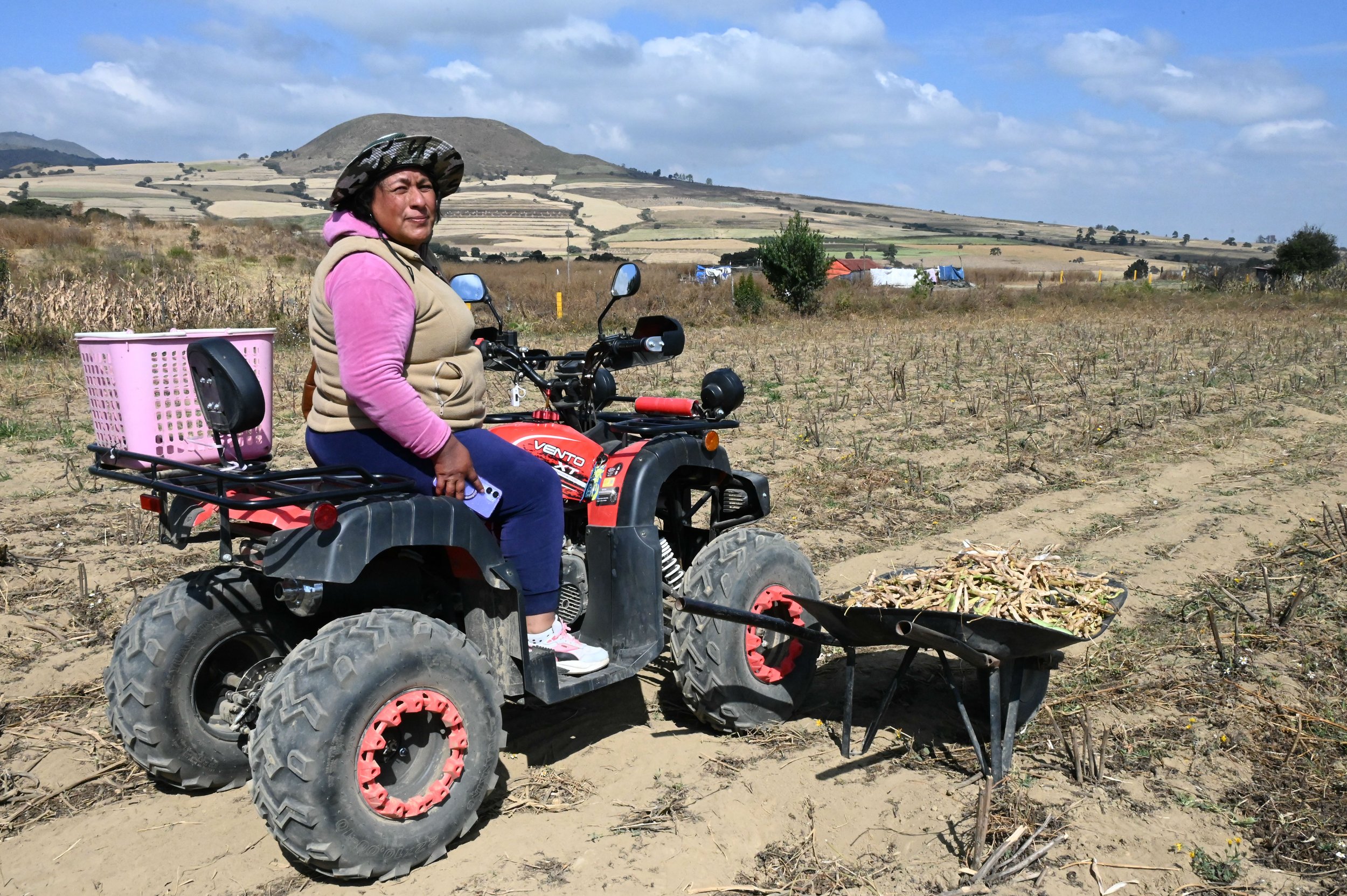
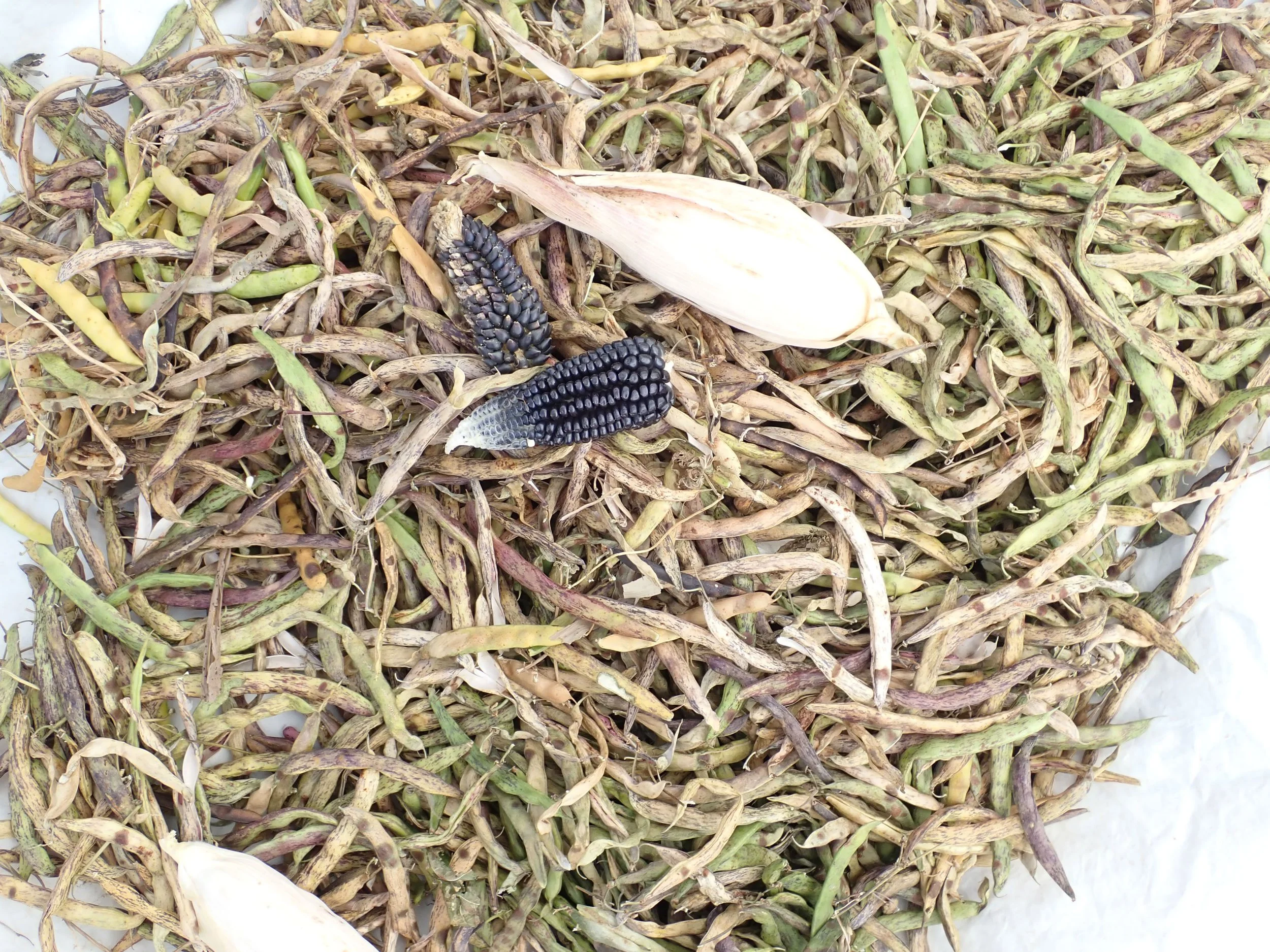
Juchitepec means "Hill of the Flowers" in Nahuatl. This area just 60 km southeast of Mexico City is aptly named; it's beautiful, but also feels rather remote. Without a guide there is little chance to find the three-hectare field Lourdes Linares farms together with her husband, Roman. Lourdes turns out to be a feisty lady with a wide-brimmed hat and an equally wide smile. She arrives at the meeting point on a quadbike and then races ahead along a potholed dirt road. Roman is waiting by the side of the field. The couple grows heritage corn, some barley and heritage beans, soil and microclimate are ideal for Garapate, Ayocote Morado and Negro, the flaming red Sangre de Torro, Amarillos and Vaquitas. He also grows Fava beans, a popular Mexican snack food.
Until 2023 their mix of crops worked fine, yields were good and the income from farming was stable. Then weather patterns changed markedly. At an altitude of 2.500, spring comes later in Juchitepec, and it's windy. In 2024, the beans looked excellent, the Linares were hoping for a bumper harvest. But in September hurricane John, a devastating tropical cyclone, hit Mexico, with record rainfall and hail. "The bean field was totally flattened", says Roman, "our harvest was less than half of what we had hoped for".
The Linares family’s bean field before the flash flood…
…and the disastrous flash flood
The following year they planted fava and heirloom beans in alternating rows. Fava beans grow tall, have strong stems and hardy leaves, which might protect the more delicate heirloom beans from the worst of wind, rain or even hail, Roman thought. Again, things looked good - until in late summer 15 days of continuous torrential rain caused major flooding. The field slopes down very slightly to both sides. Roman takes out his phone and shows us the video he shot when the rain finally stopped: there is a torrent of water, washing away whole plants. "Most of the field was completely flooded, it was like a pool and there was absolutely nothing we could do". Only about 10% of the harvest could be salvaged.
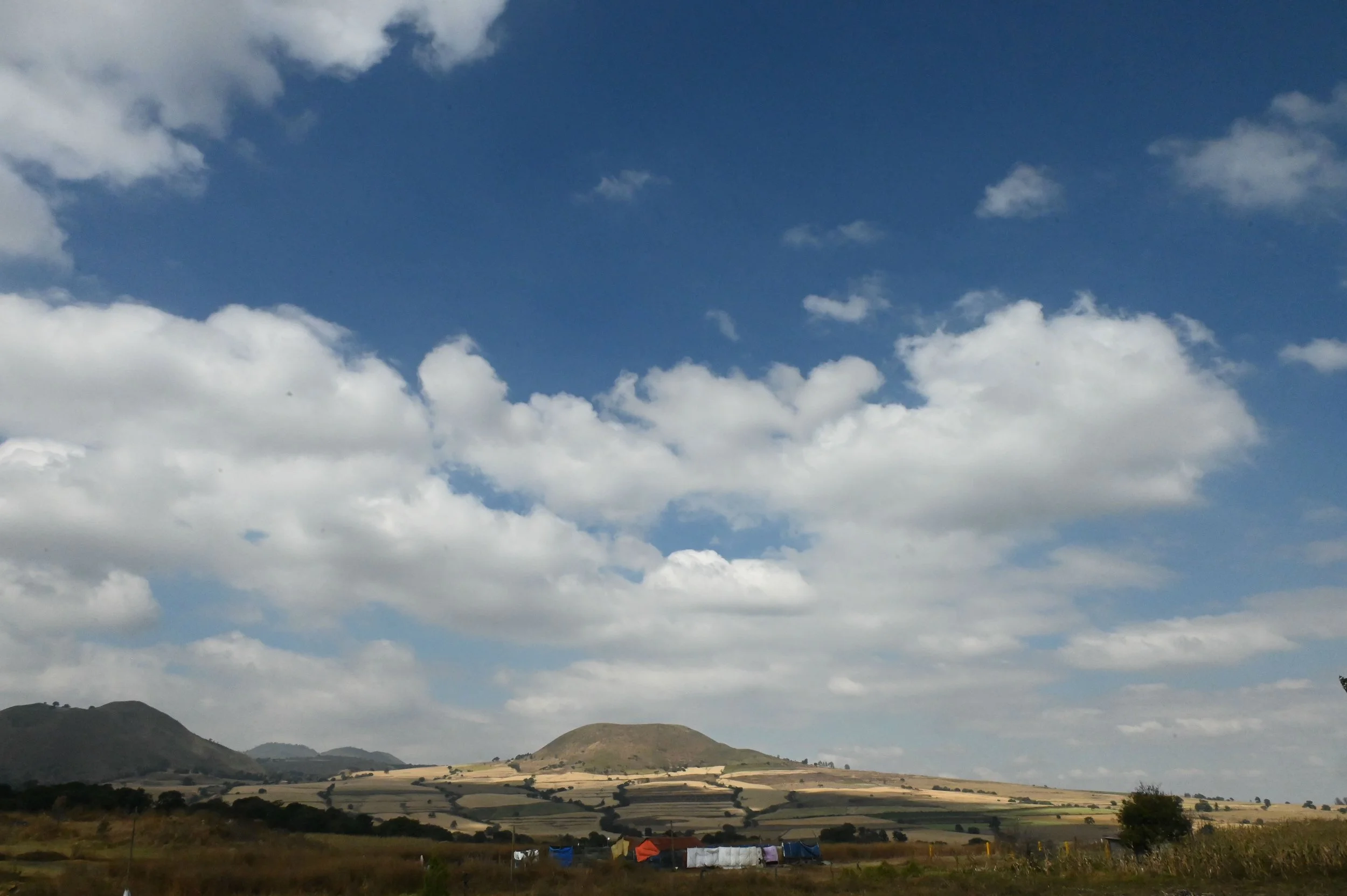
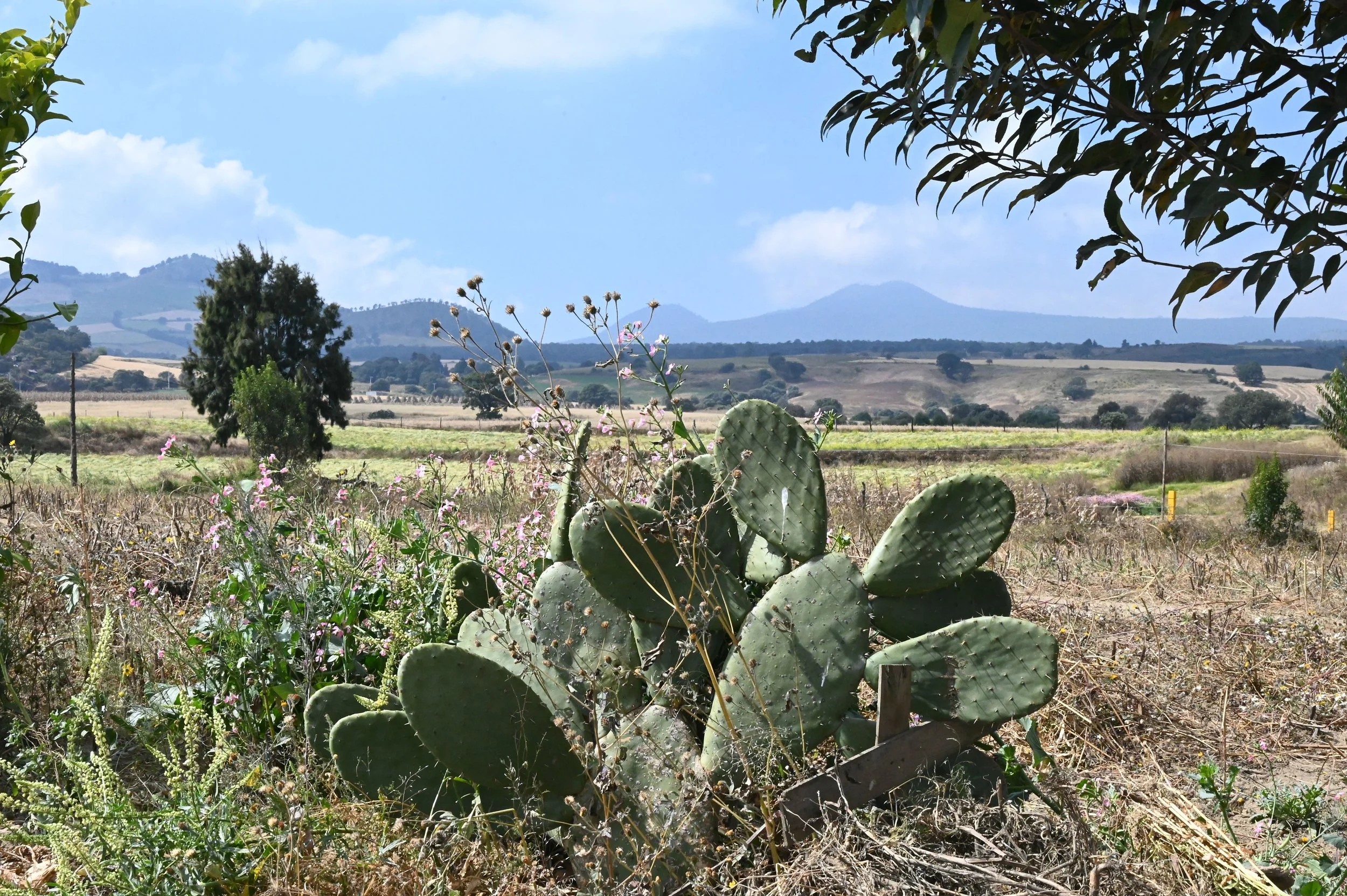
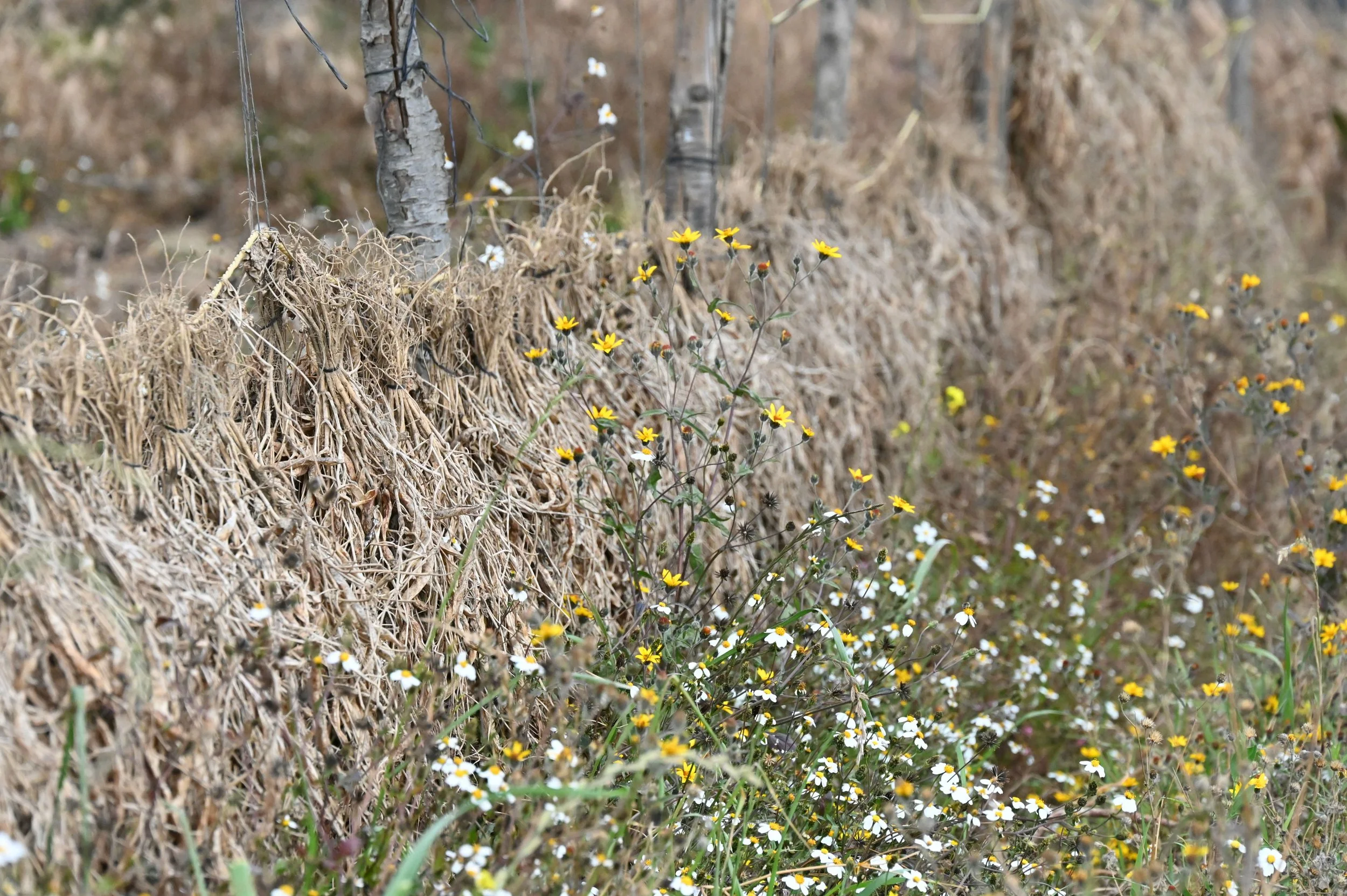
Roman doesn't employ extra labour for the harvest, it's too expensive. He picks the beans early in the morning, gathers and ties them in bundles. On the side of the field are several poles where he strings the bundles up in rows of five. Several fruit trees and bushes grow along the field margin - it's the family's orchard with figs, peaches, lemons and apples. In between grow radishes, squashes, nopal cacti, Sangre de Toro beans, chilis, camomile, onions - to name just some of the fruits and vegetables we see. "We eat well", says Lourdes, "all we need we can grow here".
Unlike the beans, the trees and veg plot survived both the 2023 hail storm and the flooding during the following year rather well.
Both Roman and Lourdes consider the climate crisis to be very real, "we'll have to deal with it", says Roman. But how? The traditional milpa system, growing corn, beans and squashes together isn't an option. The corn grows way too tall and would be flattened by even moderate winds. Could he plant more trees to protect the beans? In theory, yes, but it would take far too long for the trees to grow to a reasonable height to make this a viable option. To him, growing heritage beans together with the resilient and sturdy favas seem to be the most promising solution.
When the 2023 harvest failed he had to take out a loan to buy seeds and he is still paying the last of it back.
Through our Mexican export partner we pay a Fair Trade premium to co-finance an advance at the time of planting. In case of crop losses because of a severe weather event the advance does not have to be repaid. By sharing the risk of growing traditional bean varieties we can help growers like Roman and Lourdes to stay in farming.
The family farm probably could survive if they gave up growing beans and switched to other crops. In a ‘normal’ year beans are not only the most profitable crop, Roman also likes growing them, they are part of his heritage and the family's way of life, he says. "Lourdes' and my ancestors probably farmed here already 200 years ago. I like working this land, I can breathe here." As we talk his eyes scan the landscape, the rolling fields, the mountains that rise in the distance, and he points out first one, then three eagles effortlessly gliding above.
Words by Marianne Landzettel; photos by Martin Kunz