Purple and polished - Ayocote beans from the Diaz Family
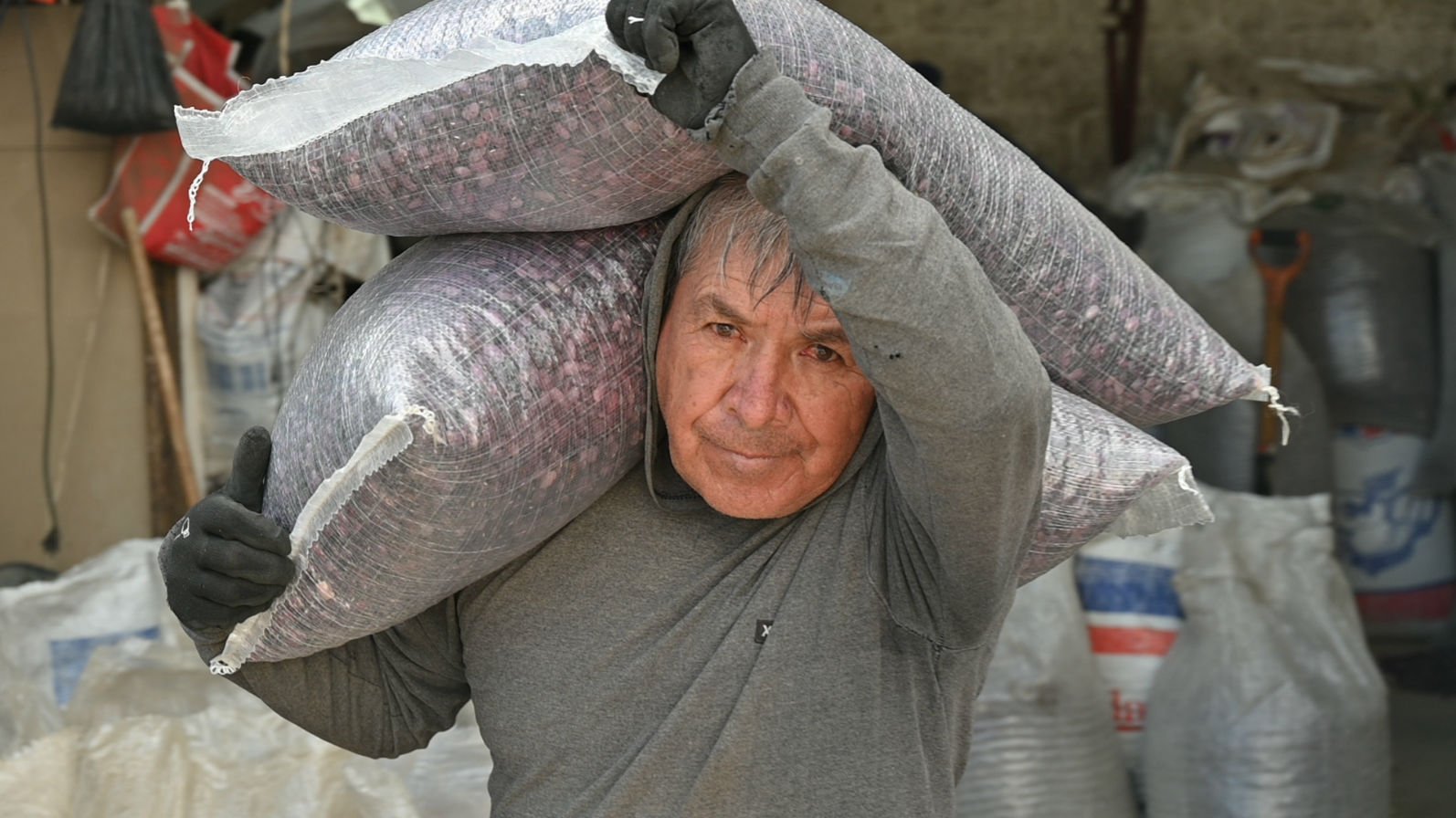
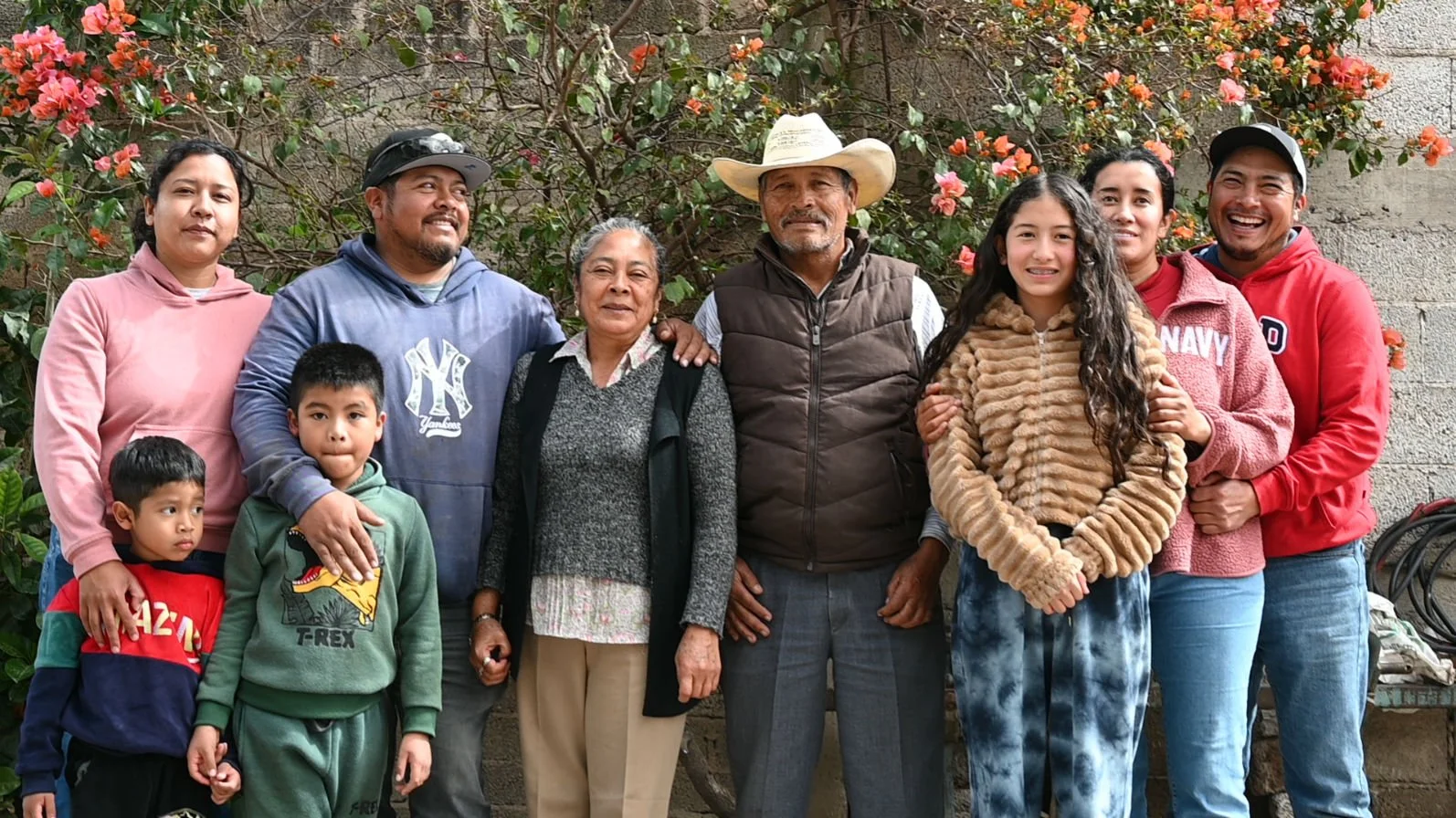
About 100km east of Mexico City lies Texemulcan and on the outskirts of town the Diaz family has their farm. Three generations share the spacious farm house: Octavio and this wife Marie Elena, two of their sons, Cesar and his younger brother Paco, their wives and children. Like the Ivaras in Ozumba they started out farming but realised over the years that in food a lot of the money is in processing, sales and marketing. If farmers want to make a living, they need to add value and rely on middle men as little as possible.
The Diaz family has built a complete supply chain for traditional ayocote and other beans. They rent around 35 hectares of land on which they grow beans and blue corn for seed. That's also where Cesar tests the bean harvester he is developing. Fava beans can already be machine harvested, but traditional runner bean varieties such as ayocote still need a lot of manual labour, and labour costs are rising. Cesar is working on the modification of a small fava bean harvester: two metal plates are pushed under the beans while a knife cuts through the middle. Two discs revolving in opposite directions accumulate the beans in a row, like rotary rakes.
At the moment the discs are not in sync yet but he hopes the machine will be ready for the 2026 harvest. At present it will take 10 people six hours to harvest one hectare of beans, the machine will – hopefully - do the work in one hour.
The Diaz family’s bean-packing shed
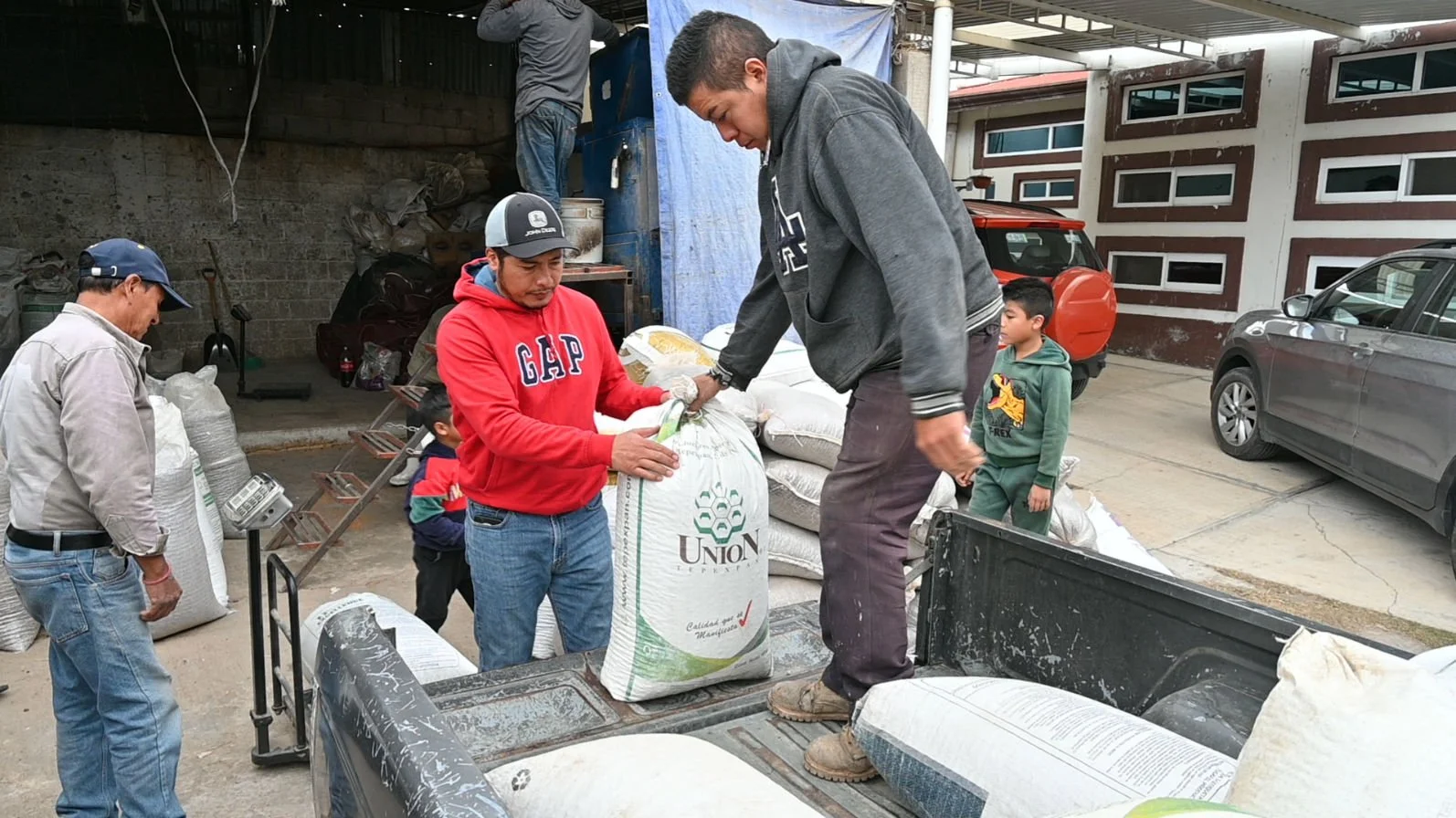
The Diaz family works with around 150 farmers in the region, they provide seed, advise on what varieties to grow, they help to assess soil quality and fertiliser needs and they buy beans after the harvest. The Diaz family has established solid relationships with the farmers which are based on mutual trust, they even extend credit for seed and inputs. If the harvest is bad because of hail or rain the producers can pay the loan back when they can, even if it takes a couple of years.
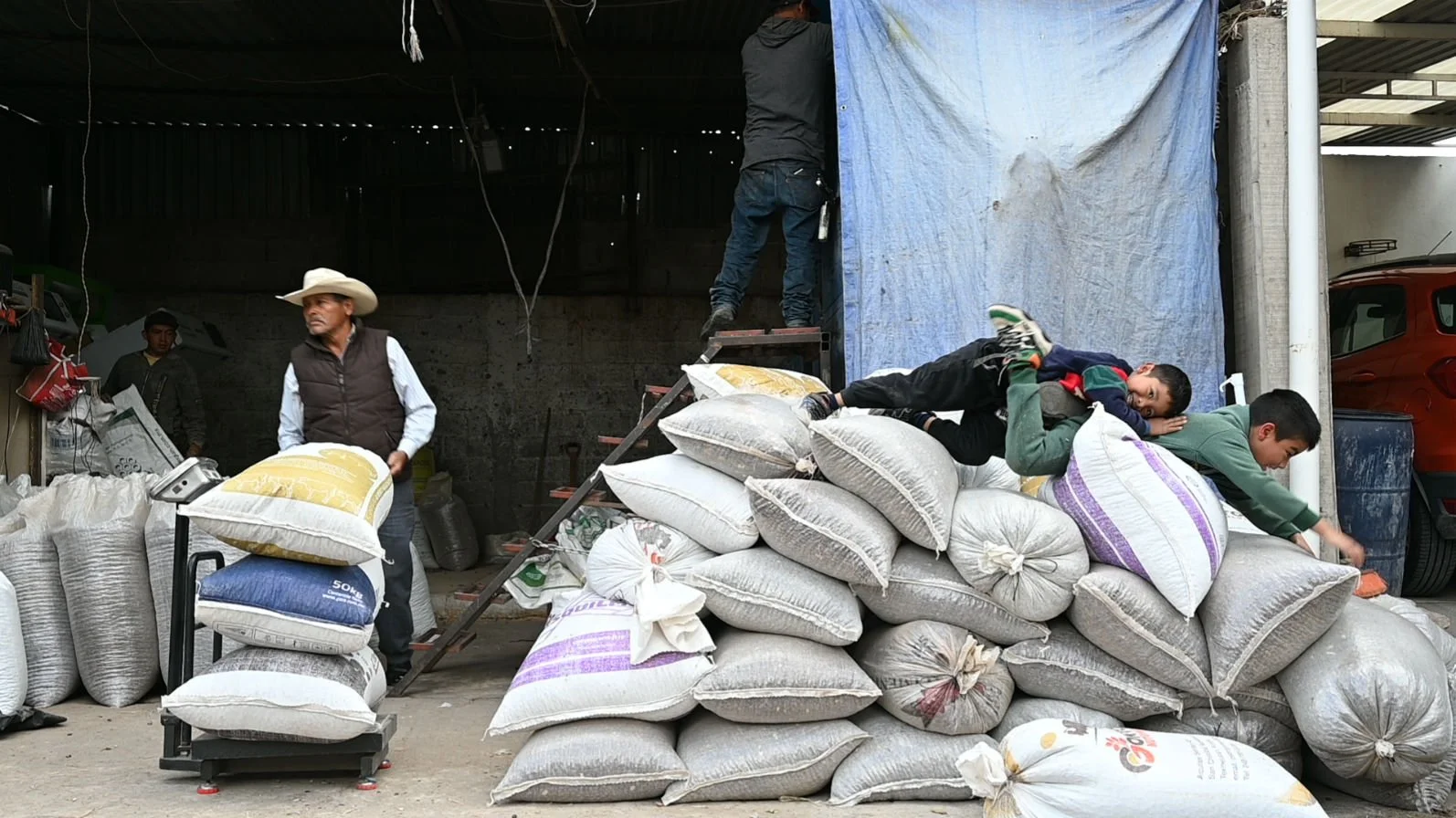
Annually, Cesar and Paco purchase about 200 to 300 tons of traditional bean varieties, mostly Ayocote Morado and Vaquita Negro, and another 200 tons of Fava beans which are very popular as a snack in Mexico.
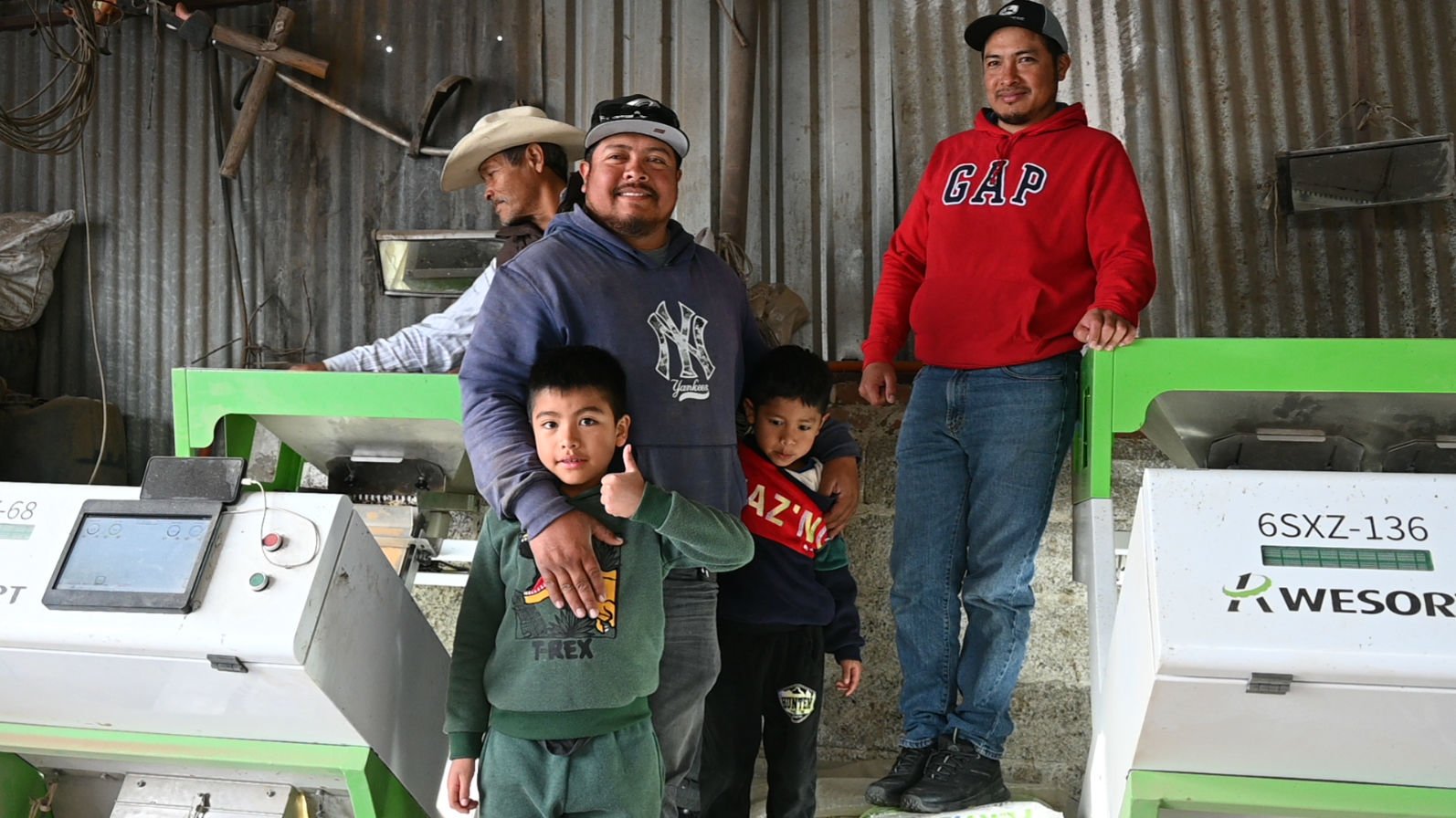
Bean polishing in progress!
Next to the farm house is the cleaning shed: there is one machine for the initial cleaning to separate small twigs, leaves and dirt from the beans. Two other machines for 'fine cleaning' get rid of dust and small dirt particles. And before the beans are packed in 25kg sacks they are polished. How do you polish beans? You mix the beans with saw dust and send it through a hopper where the saw dust is sifted out, leaving behind shiny beans.
Climate and soil in the area are ideally suited to growing traditional bean varieties, in particular ayocote. But then farmers discovered another, very high value crop: chilis which is what the region became famous for. Chilis were an excellent cash crop until overproduction led to a drop in price. When Octavio Diaz took over the farm from his Dad he decided to grow ayocote again. Initially there were no buyers. So, he took a sack of beans and travelled to Mexico City. Customers at the Central Market were delighted to once again be able to buy this traditional and very flavourful variety. That was 40 years ago, and by now, the Diaz family supplies several big supermarket chains, as well as exports to the US, too.
Vaquita Rojo, Sangre de Torro and Peruanos are other varieties that would do well in the area. All these beans have a unique flavour, agree Cesar and Paco, and if there is a market for them they would be more than happy to work with farmers to supply them.
And the Diaz family does not have to shoulder the risk alone: via the exporter The Heirloom Bean Co. pays a Fair Trade premium to co-finance an advance at the time of planting. In case of crop losses because of a severe weather event the advance does not have to be repaid but is written off. By sharing the risk of growing traditional beans we help farmers to work in a sustainable way and for seed breeders like the Diaz family to adapt varieties to the wildly varying growing conditions that are the new normal.
Words by Marianne Landzettel; photos by Martin Kunz